
Precision Cuts That Support System Performance
Trenching Services in Carrollton for septic installations, drainage improvements, and site preparation requiring exact depth and slope control
Trenches cut to incorrect depths cause septic systems that won't drain properly and drainage lines that pool water instead of moving it away from structures. Downs Plumbing Services provides trenching for septic systems, drainage improvements, and other site preparation projects across Carrollton, using equipment and techniques matched to soil conditions and project specifications. The width, depth, and slope of each trench determine whether the installed system functions as designed, so measurements are verified throughout the digging process.
Trenching involves excavating narrow channels to specified dimensions, maintaining consistent slopes calculated for gravity flow, and preparing stable trench floors that support pipe without sagging or shifting. Operators use laser levels or grade stakes to verify that each section of trench follows the planned elevation change. Soil type affects how trenches are cut—sandy soils may require wider cuts or temporary shoring to prevent wall collapse, while clay soils often hold vertical cuts but require different backfill techniques.
Request an estimate based on your project's trench dimensions and site access requirements.
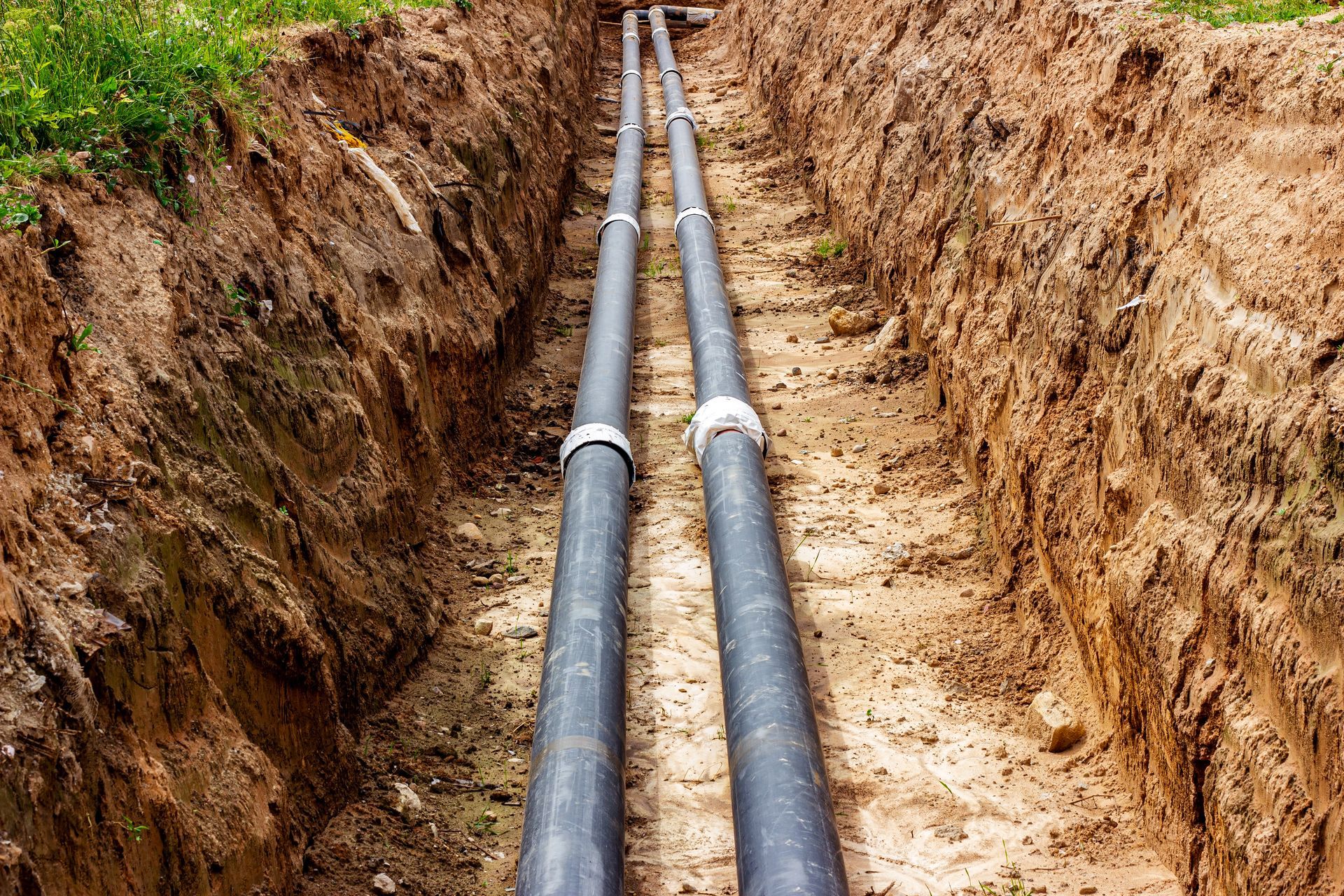
How Trenching Addresses Installation Requirements
Properly planned trenching begins with understanding what will be installed in the trench—septic distribution lines require specific slopes to move effluent by gravity, drainage pipe needs fall toward discharge points, and utility lines have minimum burial depths set by code. The trench floor must be uniform and free of rocks or debris that could damage pipe, so operators remove protruding material and add bedding layers where specified. Trench width accommodates the pipe diameter plus space for backfill compaction on both sides.
After installation is complete and systems are inspected, you notice that trenches are backfilled in controlled lifts, compacted to prevent settling that would create low spots or stress installed pipe. Surface grades restore drainage patterns, and areas disturbed by trenching are returned to conditions that support landscaping or construction activities. Septic systems drain consistently because trenches maintained the correct slope during installation. Drainage improvements function without standing water because trench grades direct flow toward intended outlets.
Trenching services include careful site restoration—backfill is placed and compacted methodically, topsoil is spread where final grading is complete, and disturbed areas are left stable for the next phase of construction or property use. Safe operation protects nearby structures, utilities, and landscaping, with operators adjusting equipment paths to minimize site impact while completing excavation efficiently.
Answers to Frequent Trenching Questions
Property owners and contractors typically want to understand how trenching is executed and what factors influence the process.
What slope is required for septic distribution trenches?
Septic trenches typically fall between one-quarter inch and one-half inch per foot of run, providing enough gradient to move effluent without creating flow velocities that could erode trench bedding. The exact slope depends on system design and soil absorption rates.
How wide do trenches need to be for drainage pipe installation?
Trench width depends on pipe diameter and whether bedding material will be placed around the pipe—standard practice allows at least six inches of clearance on each side of the pipe for proper backfill placement and compaction.
What happens if trenching encounters rock or hard clay?
Operators switch to equipment capable of breaking through rock layers or use narrower cutting tools for dense clay, adjusting the excavation approach while maintaining the trench dimensions and slopes required for system installation.
When is trenching scheduled for construction projects in Carrollton?
Trenching typically occurs after rough grading establishes site elevations and before system installation, coordinated so that open trenches don't remain exposed to weather longer than necessary and excavation aligns with installer availability.
How is trench backfill compacted to prevent settling?
Backfill is placed in layers no more than six to eight inches thick before compaction, using equipment appropriate to trench width and proximity to installed pipe. Proper compaction prevents surface depressions that develop months after trenching is complete.
Downs Plumbing Services coordinates trenching with system installers and construction schedules to maintain project momentum. Contact the office to arrange trenching services aligned with your installation timeline and site conditions.