Foundation Work That Supports Stable Construction
Excavation Services in Carrollton for residential and light commercial projects requiring precise site grading and foundation preparation
Downs Plumbing Services handles excavation for foundations, house pads, septic systems, drainage improvements, and general site preparation across Carrollton. The accuracy of excavation work determines whether concrete pours level correctly, whether drainage flows away from structures, and whether site conditions support long-term stability. Residential construction and light commercial projects rely on excavation that matches engineering specifications and accounts for soil conditions encountered during digging.
The service involves removing soil to specified depths and dimensions, grading surfaces to establish proper slope and elevation, and preparing stable base surfaces for concrete placement or system installation. Equipment selection depends on access limitations, soil type, and the scale of excavation required. Experienced operators adjust digging techniques based on what the soil reveals—clay layers that affect compaction, rock formations that require different equipment, or water tables that influence foundation design.
Schedule a site evaluation to review project specifications and soil conditions before excavation begins.
What Proper Excavation Requires
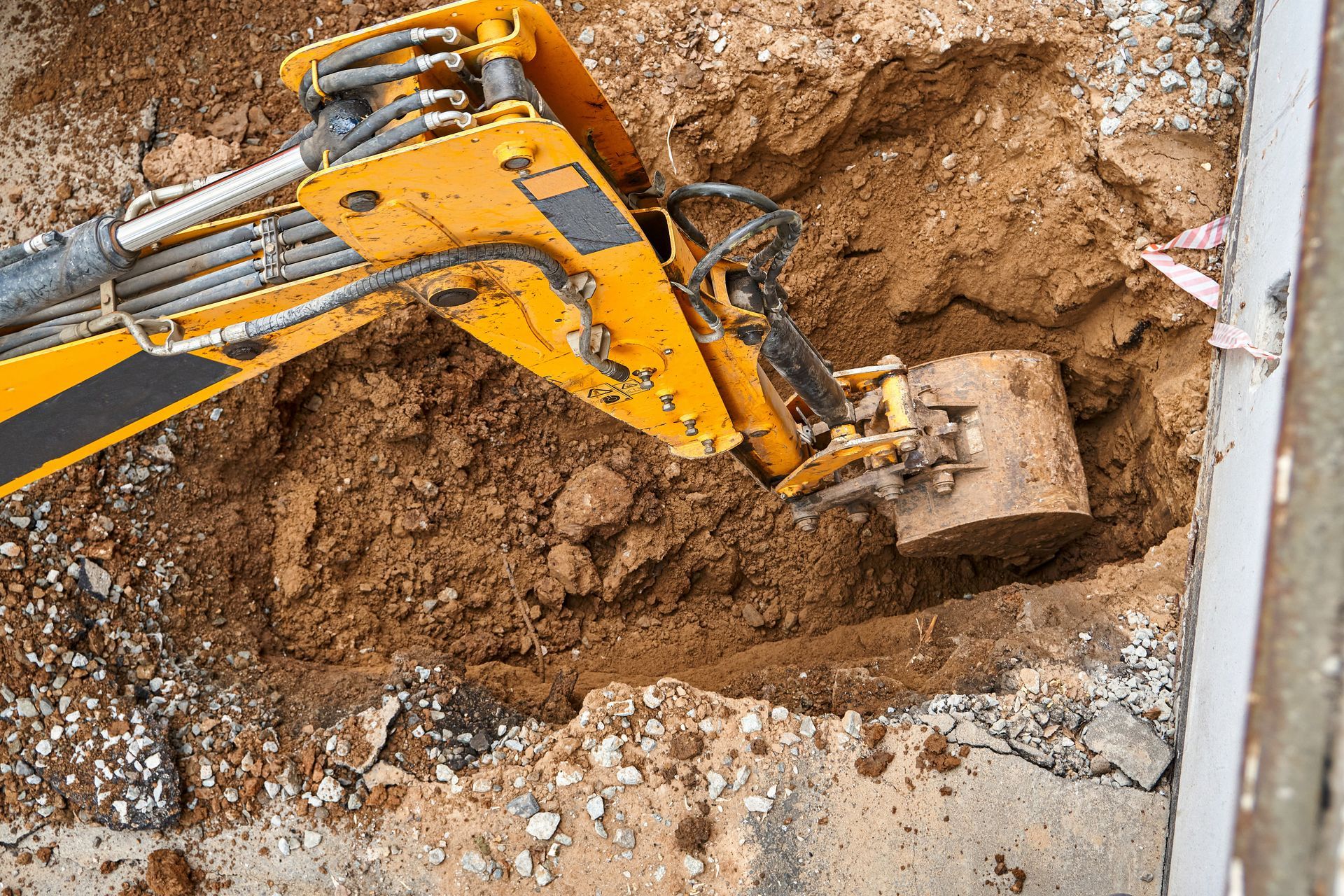
Accurate excavation starts with understanding the dimensions and elevations specified in construction plans, then translating those measurements to the physical site using grade stakes and laser levels. Operators remove soil in controlled lifts, checking depth and slope continuously to avoid over-excavation that compromises load-bearing capacity. For foundation work, the base surface must reach undisturbed soil or engineered fill that supports the weight of the structure without settling.
Once excavation is complete, you see level house pads ready for concrete forming, trenches cut to exact depths for septic lines or drainage pipe, and graded surfaces that direct water away from building sites. Foundations pour on stable, uniformly compacted surfaces. Drainage systems function as designed because trenches follow planned slopes. Site access improves because rough grading eliminates low spots where equipment would bog down during construction.
The process includes site restoration after excavation—backfilling trenches once systems are installed, spreading topsoil where final grading is complete, and removing excavated material or redistributing it according to site plans. Dependable scheduling keeps excavation aligned with the broader construction timeline, so concrete contractors, septic installers, and builders can proceed without delays caused by incomplete site preparation.
What Homeowners and Contractors Usually Ask
Questions about excavation often focus on how site conditions affect the work and what the process involves for different project types.
What determines the depth and extent of excavation for a house pad?
The foundation design specifies how deep footings must extend below grade, typically reaching soil layers that provide adequate bearing capacity without excessive settlement. In Carrollton, soil conditions vary across properties, so test results or engineering plans guide the excavation depth required to support the structure.
How does excavation for septic systems differ from foundation work?
Septic excavation involves digging trenches for distribution lines and a larger pit for the tank, following slopes calculated to move effluent by gravity. The process requires precision to maintain grade so the system drains properly, and it often includes multiple trenches radiating from the tank location.
What happens if rock or unexpected soil conditions appear during digging?
Operators adjust equipment or techniques based on what the excavation reveals—switching to rock-breaking attachments for ledge, adjusting trench widths if soil walls don't hold vertical cuts, or recommending engineered fill if the native soil won't compact adequately for foundations.
When should excavation be scheduled relative to other construction activities?
Excavation typically occurs after site clearing and before concrete work or system installation, coordinated so that the excavated site remains stable and accessible for the next phase without weather-related delays or equipment conflicts.
What site restoration happens after excavation is complete?
Backfilling replaces soil around foundations and over utility lines once inspections are passed, rough grading spreads material to match planned elevations, and excess soil is either redistributed on-site or hauled away depending on project requirements and available space.
Downs Plumbing Services coordinates excavation with construction schedules and site conditions throughout the Carrollton area. Discuss your project timeline and site requirements to plan excavation that supports efficient building progress.