Water Flow That Protects Structures Permanently
Drainage & Water Management in Carrollton for properties experiencing erosion, standing water, or water movement threatening foundations and outdoor spaces
Standing water near foundations, erosion channels cutting through yards, and saturated soil around structures indicate that water isn't moving off the property as it should. Downs Plumbing Services designs and implements drainage improvements for residential properties, new construction, and existing landscapes throughout Carrollton. Effective water management redirects flow away from vulnerable areas, establishes controlled discharge points, and prevents recurring problems that worsen with each rain event.
The service involves analyzing how water currently moves across the property during rain, identifying where it accumulates or flows toward structures, then grading surfaces and installing drainage features that redirect water toward safe discharge locations. Solutions include regrading to correct low spots and establish positive slope away from buildings, cutting swales or channels that intercept uphill water before it reaches structures, and installing subsurface drainage pipe where surface grading alone won't resolve the problem. Property layout and natural topography determine which combination of techniques will manage water effectively.
Request an evaluation for drainage concerns affecting your property or construction site.
What Changes After Drainage Improvements Are Finished
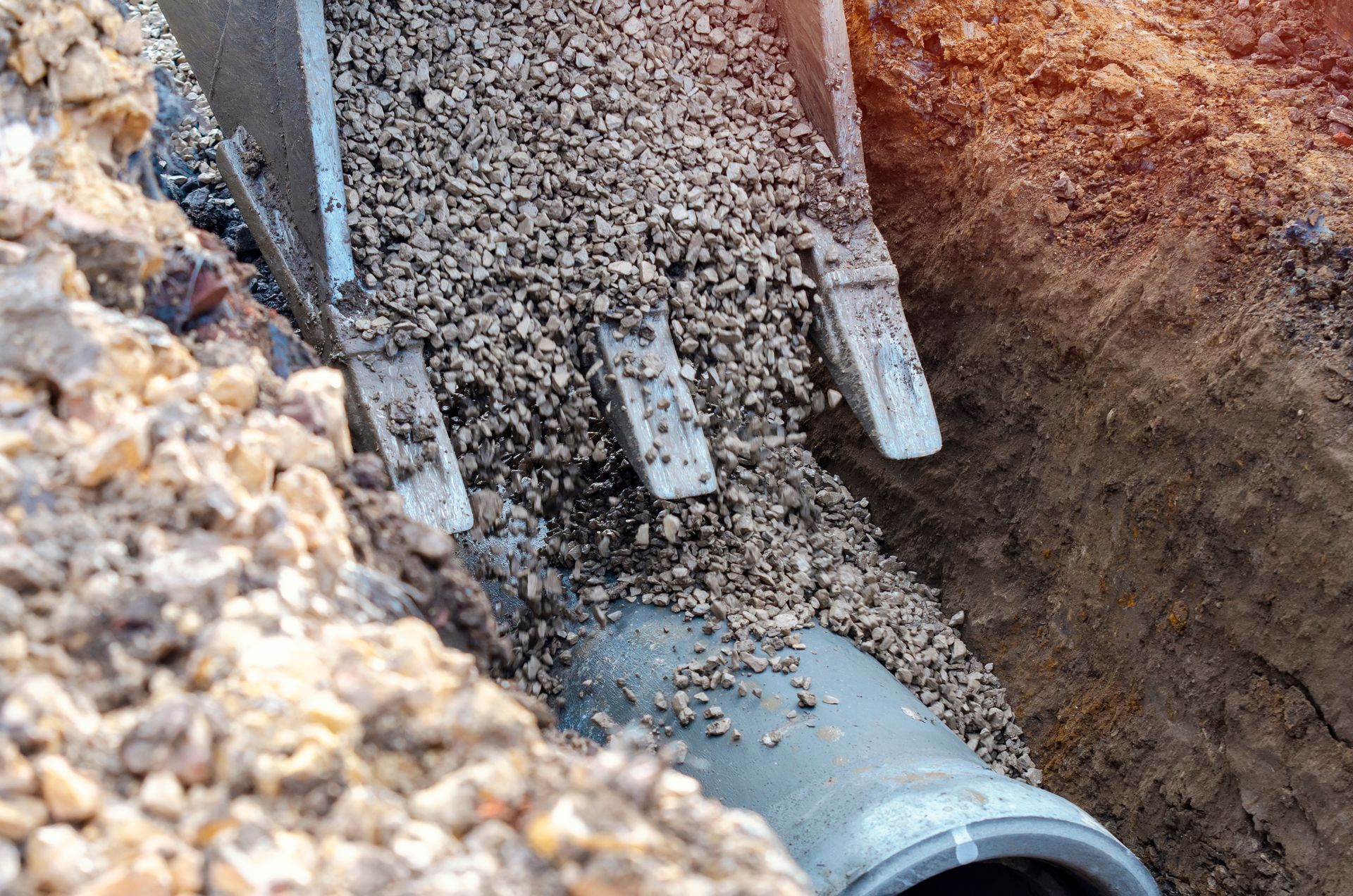
Drainage planning starts with walking the property during or shortly after rain to observe where water collects, which directions it flows, and what barriers or low spots prevent it from leaving the site. Grading adjustments reshape surfaces to create slopes that move water predictably toward discharge points—typically toward street drainage, natural drainage courses, or designated low areas away from structures. Subsurface drainage involves trenching for perforated pipe that collects water from saturated soil and conveys it underground to outlets, keeping the surface usable while managing water that surface grading can't address.
Once drainage improvements are complete, you see water moving off the property during rain instead of pooling near foundations or flooding low areas. Erosion channels stop expanding because flow is controlled and distributed rather than concentrated in vulnerable paths. Outdoor spaces remain usable after storms because standing water drains within hours instead of persisting for days. Foundations stay dry because grading directs water away from perimeter walls before it can saturate the soil or seep into crawl spaces.
Customized solutions account for site-specific conditions—soil permeability affects whether surface grading or subsurface drainage is more effective, property boundaries limit where water can be discharged, and existing landscaping or hardscaping influences which grading adjustments are practical. The goal is water management that functions reliably without requiring ongoing maintenance or adjustment, protecting structures and outdoor areas through seasonal weather variations common to rural and residential properties in the region.
Common Questions About Drainage Solutions
Homeowners dealing with water problems want to understand what causes the issues and how solutions address them permanently.
What causes water to pool near foundations instead of draining away?
Pooling near foundations typically results from settled soil that creates low spots, grading that slopes toward the building instead of away from it, or compacted surfaces that prevent water from infiltrating and force it to flow across the ground toward structures.
How do grading adjustments fix drainage problems?
Regrading reshapes the ground surface to establish positive slope away from structures, typically at least two percent grade for the first ten feet. This gradient causes water to flow by gravity away from vulnerable areas toward designated drainage paths or discharge points.
When is subsurface drainage necessary instead of just regrading?
Subsurface drainage becomes necessary when soil stays saturated even after surface water drains, when property slopes make surface grading impractical, or when hardscaping like driveways or patios prevents surface water from reaching safe discharge areas.
What discharge options exist for properties without street drainage access?
Rural properties in Carrollton often discharge to natural drainage courses, wooded low areas, or constructed drainage swales that convey water to absorption areas away from buildings. The property's natural topography usually provides workable discharge points when surface flow is properly directed.
How long do drainage improvements take to show results?
Surface grading shows results immediately—water flows in new directions during the next rain. Subsurface drainage may take several rain events to fully dewater saturated soil, but performance improves progressively as the system removes water that previously remained trapped underground.
Downs Plumbing Services evaluates properties throughout Carrollton to identify drainage solutions matched to site conditions and water flow patterns. Schedule a property assessment to review options for managing water that currently threatens structures or limits outdoor space usability.